
What Our Clients Say
Our customers trust us to deliver exceptional results. Read what they have to say about their experience with Ceramic Coatings Las Vegas.
Paint correction before ceramic coating can make the difference between coating paint that looks clean and glossy and coating paint that still shows swirls, haze, water spots, and light scratches. Ceramic coating adds a protective layer over the finish, but it does not erase defects already present in the clear coat.
That matters for vehicle owners in Las Vegas, NV and Henderson, NV who want ceramic coating because they care about how their paint looks. If visible defects bother you before the coating is applied, there is a good chance they will still bother you afterward unless they are addressed first.
Paint correction uses machine polishing to reduce certain defects in the clear coat. The amount of correction should depend on the condition of the vehicle, the thickness and health of the paint, and the result the owner wants.
Not every vehicle needs heavy correction. Some may need only light polishing. Others may need more work. Even a new vehicle should be inspected rather than assumed to have flawless paint.
Let’s break down why paint correction before ceramic coating deserves attention before your coating appointment.
Paint correction is a polishing process used to reduce visible defects in automotive clear coat.
Those defects can include:
The work is done using polishing machines, pads, compounds, polishes, or a combination selected for the paint being worked on.
Paint correction is different from simply making paint shiny with wax or sealant.
Correction works on defects in the paint surface itself.
When performed properly, polishing can leave the paint clearer and more reflective because fewer visible defects are scattering light across the surface.
This is one reason paint correction before ceramic coating is often discussed as part of the same service plan.
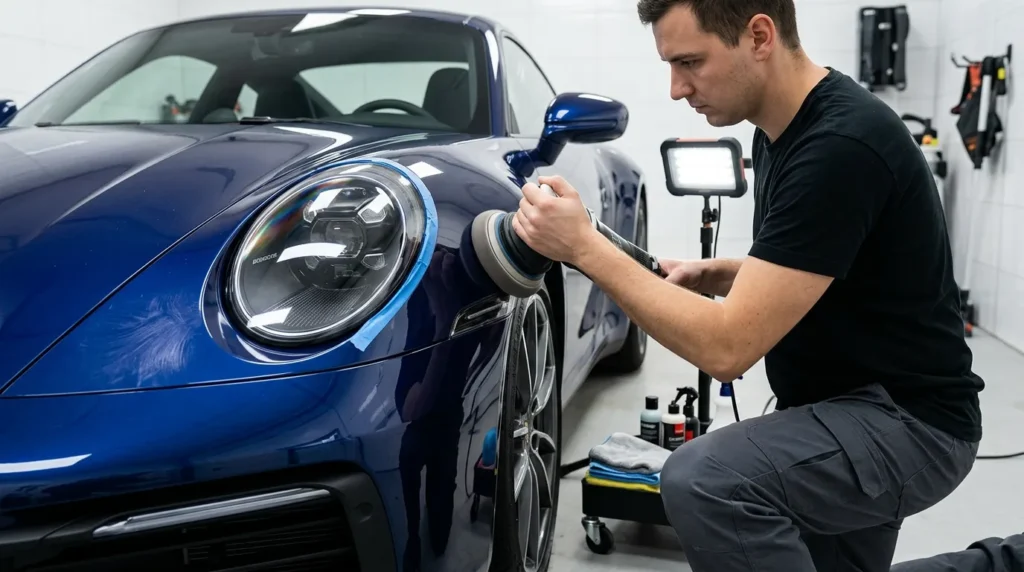
The correction improves the appearance of the existing paint. The ceramic coating is then applied over that prepared finish.
A ceramic coating is not a replacement for polishing.
Gtechniq’s ceramic coating guidance lists paint correction as a preparation step when swirl marks and minor scratches need to be addressed before coating.
Gtechniq Ceramic Coating Guide
Gtechniq also tells users of its C1 Crystal Lacquer coating to handle swirl marks and light scratches before applying the coating.
Here is why.
A coating follows the surface underneath it.
If your black hood is covered in circular wash marks before coating, applying ceramic coating does not polish those marks away.
If the paint looks hazy from years of washing, the coating does not automatically restore clear, defect-free paint.
If there are visible scratches, those scratches do not vanish simply because a coating is applied over them.
The better approach is to decide what defects you want reduced before the coating goes on.
The results of paint correction before ceramic coating depend on what type of defect is present and how deep it goes.
Swirls are fine scratches commonly seen under direct sunlight or strong inspection lighting.
They can come from poor washing, dirty towels, automatic car wash brushes, dry wiping, or repeated contact with dirty paint.
Many light swirl marks can be reduced through polishing.
Some light scratches can also be reduced if they are limited to the upper part of the clear coat.
Deeper scratches require more caution.
Paint can lose some of its visual clarity after years of improper washing, oxidation, or previous polishing.
Correct polishing can improve clarity.
Some water spotting sits on the surface as mineral residue and can be removed through cleaning or decontamination.
Other spots can etch into the clear coat.
Polishing may reduce some etched marks, but the result depends on their depth.
Poor machine polishing can sometimes leave its own haze or marks.
A later correction process may reduce those defects when there is enough healthy clear coat to work with.
Paint correction has limits.
It is not body repair.
It cannot repair:
A deep scratch may become less noticeable after polishing without disappearing completely.
That can still be a good result.
The goal should not be to remove clear coat aggressively just to claim that every scratch is gone.
The condition of the paint has to come first.
If a defect is too deep to correct safely, leaving some of it behind may be the smarter choice.
Not in the way many vehicle owners hope.
Ceramic coating can increase gloss and alter how light reflects from the surface, but it should not be viewed as a product that removes swirls.
If swirl marks are visible before coating, they can remain visible afterward.
That is why paint correction before ceramic coating makes sense when appearance is one of your reasons for coating the vehicle.
Think about a freshly cleaned black car parked under the Nevada sun.
Direct sunlight can expose every circular wash mark across the hood and doors.
If those marks bother you, address them before applying a coating intended to remain on the vehicle for a long period.
Ceramic coating is the protection step.
Correction is the appearance-refinement step.
Sometimes, but not always.
A new vehicle should be inspected before anyone decides.
New cars can collect marks before delivery from:
A brand-new car may arrive with nearly flawless paint.
Another vehicle with the same mileage may show light swirl marks and water spots.
That is why automatically selling every new-car owner extensive correction does not make sense.
The paint should be cleaned and inspected first.
If it looks good, a lighter polishing process or limited prep may be all that is called for.
If there are defects the owner wants reduced, paint correction can be performed before the ceramic coating is applied.
You should not polish dirty paint.
Before paint correction before ceramic coating begins, the vehicle needs to be cleaned so dirt and bonded contamination are not dragged across the surface during polishing.
A preparation process can include:
Gtechniq’s paint-correction guidance also calls for cleaning and removing contamination before correction begins.
Gtechniq DIY Paint Correction Mistakes
This stage gives the installer a much clearer view of the actual paint condition.
A dirty vehicle can hide swirls, stains, scratches, and water spotting.
Once it is clean, the owner and installer can discuss realistic goals.
The exact process varies from vehicle to vehicle.
There is no reason to attack every car with the same pad, polish, machine speed, or number of correction stages.
The paint is inspected under lighting that makes defects easier to see.
Different colors can reveal defects differently.
Dark paint often makes swirls easy to spot. White and silver vehicles can hide them under normal lighting even when they are present.
A small area may be polished first to see how the paint responds.
The goal is to find a polishing approach that produces the desired improvement without doing more work to the clear coat than needed.
The installer works panel by panel.
The combination used depends on the paint and defects.
Some vehicles respond well to lighter polishing.
Others need more cutting followed by refinement.
The paint is checked again to see what changed.
Some defects may remain.
If a scratch is too deep to remove safely, a responsible correction process does not keep polishing simply to make it disappear.
Once polishing is complete, residue and polishing oils need to be removed before coating.
The surface can then be prepared for the selected ceramic coating.
There is no single answer.
Paint correction before ceramic coating should be based on the vehicle in front of the installer.
A newer car with good paint may only need limited polishing.
The goal may be removing a few light marks and preparing a clean finish for coating.
A vehicle used every day in Las Vegas, NV or Henderson, NV may show more washing marks, mineral spotting, and surface wear.
It may benefit from more correction.
Black and other dark finishes can make minor defects easier to see.
The owner may want more refinement before coating because swirl marks stand out strongly under sunlight.
Older paint needs careful inspection.
There may be deeper scratches, previous repair work, oxidation, thinning clear coat, or repainting that changes how the surface should be handled.
The age of the car alone does not decide the amount of correction.
Condition does.
This part matters when setting expectations for paint correction before ceramic coating.
Automotive clear coat has a limited thickness.
Polishing works by removing a very small amount of material from the surface to level or reduce defects.
That means chasing a deep scratch aggressively may remove more clear coat than makes sense.
A safer result can be reducing the appearance of the scratch without trying to eliminate it completely.
This is where the conversation with your installer matters.
Ask:
A realistic answer is more useful than a promise of flawless paint.
Once correction is finished, the paint needs final cleaning before ceramic coating.
The surface should be free from polishing residue and other material that could interfere with coating application.
The coating is then installed according to the manufacturer’s directions.
3M’s Ceramic Coating 39901 technical information calls for thoroughly washing and drying the vehicle before application and treating the product as a professionally applied coating for automotive finishes.
3M Ceramic Coating Technical Data Sheet
Application details and cure requirements differ between coating systems.
Once the coating has cured, the vehicle still needs proper washing.
Ceramic coating can make routine cleaning easier, but poor washing can create new marks in the clear coat underneath.
Yes.
Paint correction is not mandatory in every ceramic coating job.
If the paint already looks good and the owner is happy with its condition, extensive correction may not be called for.
The surface still needs proper cleaning and preparation.
This distinction matters.
Paint correction before ceramic coating is about improving defects before coating them, not creating unnecessary work on paint that already meets the owner’s expectations.
Some owners of work vehicles or daily drivers may accept existing cosmetic defects and simply want the other traits of a ceramic coating.
Others want the paint looking as refined as reasonably possible first.
Neither approach is automatically wrong.
The owner should know what the paint looks like and make the decision before coating.
Imagine spending money on ceramic coating, picking the vehicle up, and then seeing the same swirl marks every time sunlight hits the hood.
The coating may be performing exactly as intended.
The problem is that the paint underneath was never corrected.
This is one reason focusing only on coating lifespan can miss half the conversation.
Ask what preparation is included.
Ask how the paint will be inspected.
Ask whether polishing is part of the service.
Ask which defects will remain.
A longer-lasting coating does not automatically create better-looking paint if the surface underneath it was never properly prepared.
Paint correction and paint protection film also do different jobs.
Paint correction works on existing defects in the clear coat.
PPF is a physical film installed over painted panels.
Ceramic coating is a liquid-applied coating.
A vehicle may use all three services as part of one plan:
The correct order should be discussed with the installer before work begins.
If rock chips are the main concern, PPF deserves attention.
If swirls and haze are the concern, paint correction is the relevant service.
If gloss, water behavior, and easier cleaning are your goal, ceramic coating may fit the plan.
Las Vegas, NV and Henderson, NV can be tough places to keep dark paint looking clean.
Dust can return soon after washing. Water can dry quickly on hot panels. Vehicles parked outdoors deal with repeated contamination and washing.
Correcting and coating the paint does not eliminate those conditions.
It gives you a cleaner starting point and a coated surface that can be easier to maintain.
After correction and coating, avoid returning to the same habits that produced the original swirls.
Try to:
A freshly corrected vehicle can develop new wash marks if it is handled poorly after the service.
If you are considering paint correction before ceramic coating, start by having the vehicle inspected.
Ceramic Coatings Las Vegas is a family-owned shop serving Las Vegas, NV and Henderson, NV from:
7585 Commercial Way Suite G Henderson, NV 89011
Relevant services include:
The right amount of correction depends on your vehicle.
A new car with a few light wash marks should not automatically receive the same correction process as an older black vehicle with years of visible swirling.
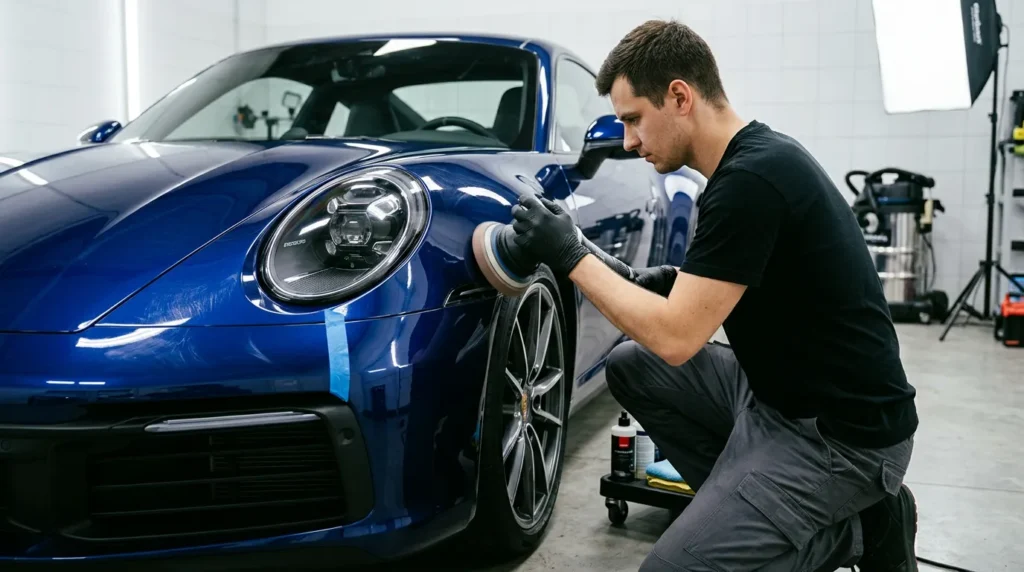
Have the paint inspected, decide what defects bother you, and choose the preparation based on the finish you want before coating.
Call (725) 318-7446 or contact Ceramic Coatings Las Vegas to schedule an appointment.
Not every car needs the same amount of paint correction. If the paint has swirl marks, haze, light scratches, or other defects you want reduced, correction may make sense before coating. A clean vehicle with paint already in good condition may only need light preparation.
No. Ceramic coating does not polish swirl marks out of the clear coat. Existing swirls can remain visible after coating. Paint correction is the service used to reduce those defects before coating.
Sometimes. New vehicles can arrive with wash marks, water spots, light scratches, or other defects from transportation, storage, and preparation. Inspect the paint first. Some new vehicles may need little polishing, while others may benefit from correction.
No. Some scratches are too deep to remove safely through polishing. Trying to eliminate a deep defect can require removing more clear coat than makes sense. In those cases, reducing the visibility of the scratch may be a better goal.
Yes, if the paint is in a condition you are happy with and the surface is properly cleaned and prepared. Polishing should solve a reason, not be added automatically to every vehicle. If visible defects bother you, address them before coating.
When correction, paint protection film, and ceramic coating are being combined, the work should be planned before installation begins. Paint defects you want addressed are commonly handled before covering the area with film or coating. Ask the installer to lay out the order for your vehicle.
Ceramic Coatings Las Vegas provides paint correction and ceramic coating for drivers in Las Vegas, NV and Henderson, NV. The shop is located at 7585 Commercial Way Suite G, Henderson, NV 89011. Call (725) 318-7446 or use the contact page to schedule an appointment.
Complete Vehicle Protection & Customization
We specialize in Paint Protection Film (PPF), Color PPF, Ceramic Coating, and Paint Correction to keep your vehicle looking showroom-new for years to come.
From Window Tint to Vinyl Wraps and Commercial Wraps, we offer comprehensive customization solutions that combine style with function.


Experience the difference that precision craftsmanship and attention to detail can make. Call us at (725) 318-7446 or request a free quote to get started on your vehicle protection project.
Visit Our Shop
★★★★★ 4.8 from 477 Google reviews · Purple Flare Wraps · Henderson & Las Vegas
“We wouldn't use anyone else.”
“They can make it happen.”
“Would bring future vehicles to them.”
“Definitely worth it on a vette.”
“Had the car back on the same day.”
“Looks like a black mirror.”
“Super happy with my front end PPF and all-around tint.”
“Fantastic job with the window tint on my brand new Audi.”
“My tahoe look amazing.”
“This is the 3rd vehicle I have now had wrapped by purple flare.”
“Not the cheapest but I was looking for quality.”
“The only place I trust.”
“Looks like paint.”
“Held up to the extreme condions.”
“Make sure you get the perfect design you are looking for.”
“Did everything exactly the way they said they would.”
“Transforming my Palisade and making it one of a kind.”